
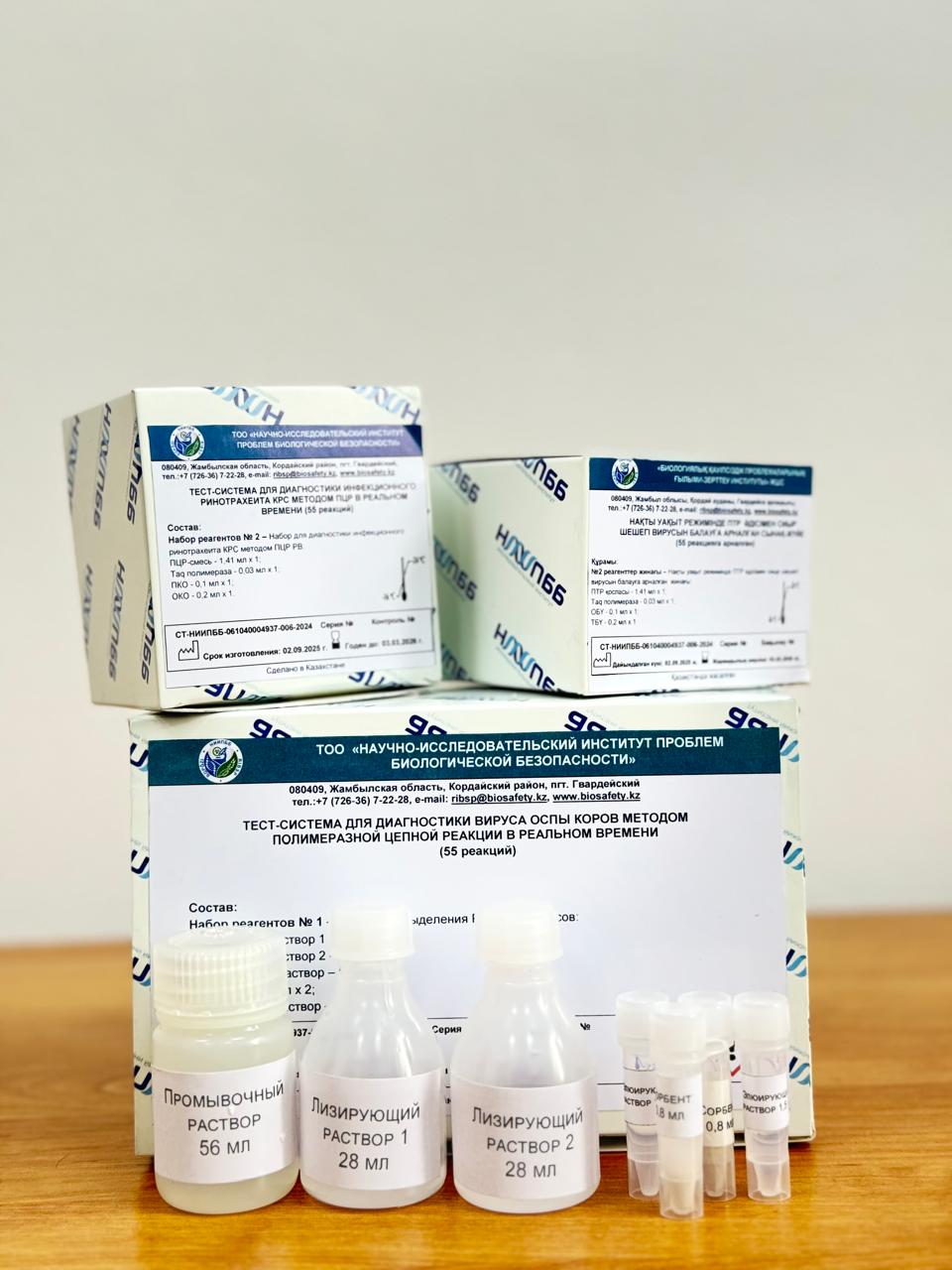
 Trade name
Test system for the diagnosis of cowpox virus by real-time polymerase chain reaction
(Certificate No. PK-VP-2-5637-25 dated May 30, 2025, issued by the Committee for Veterinary Control and Supervision of the Ministry of Agriculture of the Republic of Kazakhstan, valid for 5 (five) years until May 30, 2030)
Composition of the kit
The real-time PCR test system for cowpox virus diagnosis includes two reagent kits:
– Kit No. 1 for DNA extraction (lysis, washing and elution solutions, sorbent);
– Kit No. 2 for PCR amplification (PCR mix, Taq DNA polymerase, control samples).
The kit is designed for 55 test reactions, excluding control samples. Components are supplied in polypropylene tubes and vials of various volumes with hermetically sealed caps.
Intended use
The test system is intended for the detection of cowpox virus DNA in biological materials, blood serum, and infected cell cultures by real-time PCR. The method is based on amplification of a specific viral DNA fragment with real-time fluorescent signal detection, ensuring high sensitivity and specificity.
The kit contains all reagents required for analysis and is intended for use in veterinary diagnostic laboratories for disease monitoring, outbreak control, and confirmation of diagnosis.
Advantages
There are currently no domestically produced real-time PCR test systems for cowpox virus detection. The developed test system provides early and reliable identification of infection and demonstrates high sensitivity and specificity. The kit is ready to use, compatible with most real-time PCR instruments, and convenient for routine laboratory diagnostics and disease control.
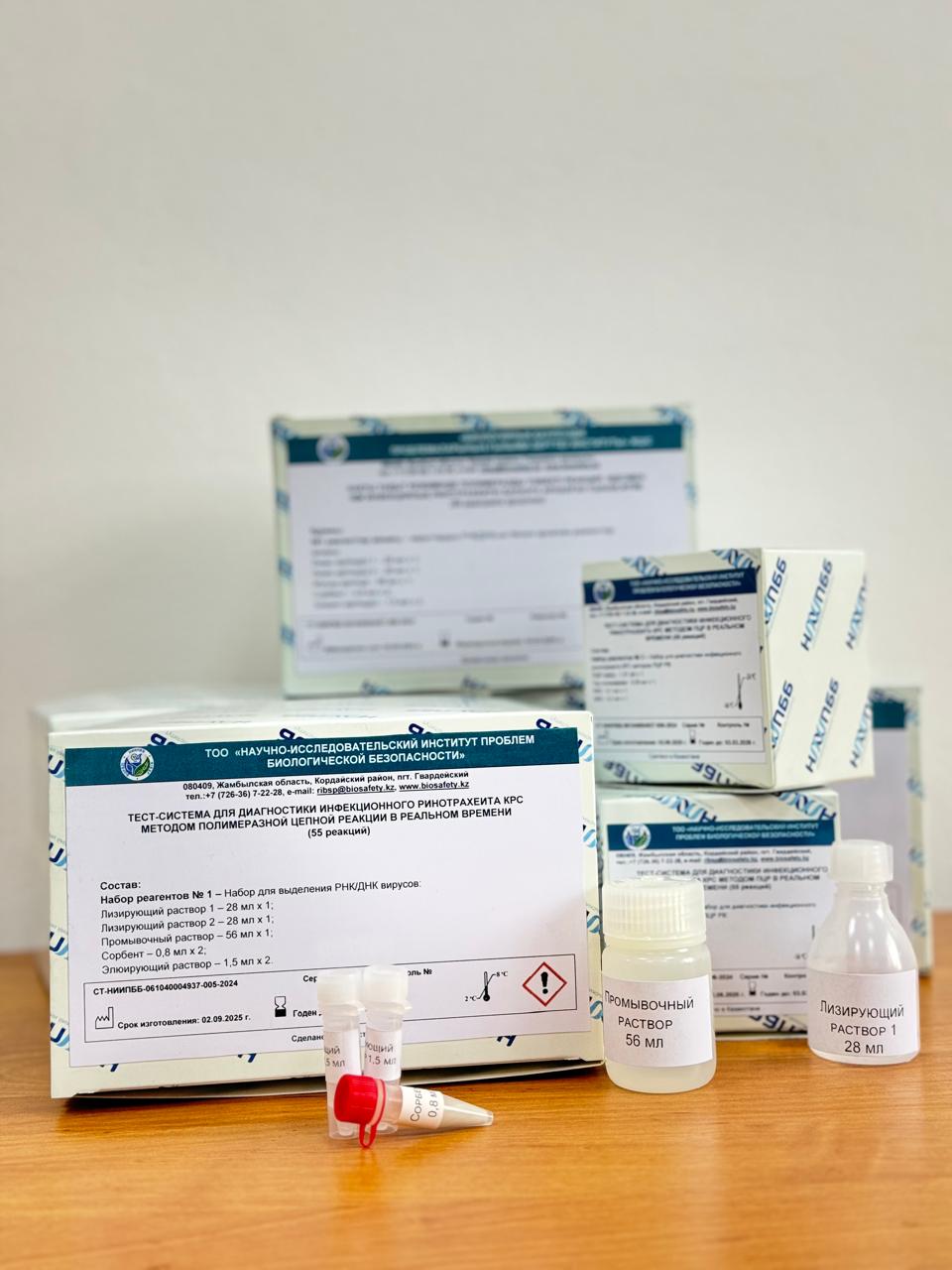
Trade name
Test system for the diagnosis of infectious bovine rhinotracheitis by real-time polymerase chain reaction
(Certificate No. PK-VP-2-5636-25 dated May 30, 2025, issued by the Committee for Veterinary Control and Supervision of the Ministry of Agriculture of the Republic of Kazakhstan, valid for 5 (five) years until May 30, 2030)
Composition of the kit
The real-time PCR test system consists of two reagent kits:
– Kit No. 1 for viral DNA extraction (lysis, washing and elution solutions, sorbent);
– Kit No. 2 for PCR amplification (PCR mix, Taq DNA polymerase, control samples).
The kit is designed for 55 reactions, excluding controls.
Intended use
The test system is designed for rapid and accurate detection of infectious bovine rhinotracheitis virus in clinical samples. The method is based on amplification of specific viral DNA fragments with real-time fluorescent signal detection, allowing qualitative and quantitative assessment of infection.
The kit includes all necessary components for PCR analysis and is intended for veterinary laboratories for diagnosis of cattle infections using various biological materials (swabs, samples, semen, tissues). The system supports early detection, preventive control, and monitoring of the epizootic situation.
Advantages
There are no domestically produced real-time PCR diagnostic kits for infectious bovine rhinotracheitis virus detection. The developed test system demonstrates high sensitivity and specificity, enabling virus detection even at low viral loads. The kit is ready to use, compatible with most PCR amplifiers, and ensures reliable and reproducible results in laboratories of any capacity.
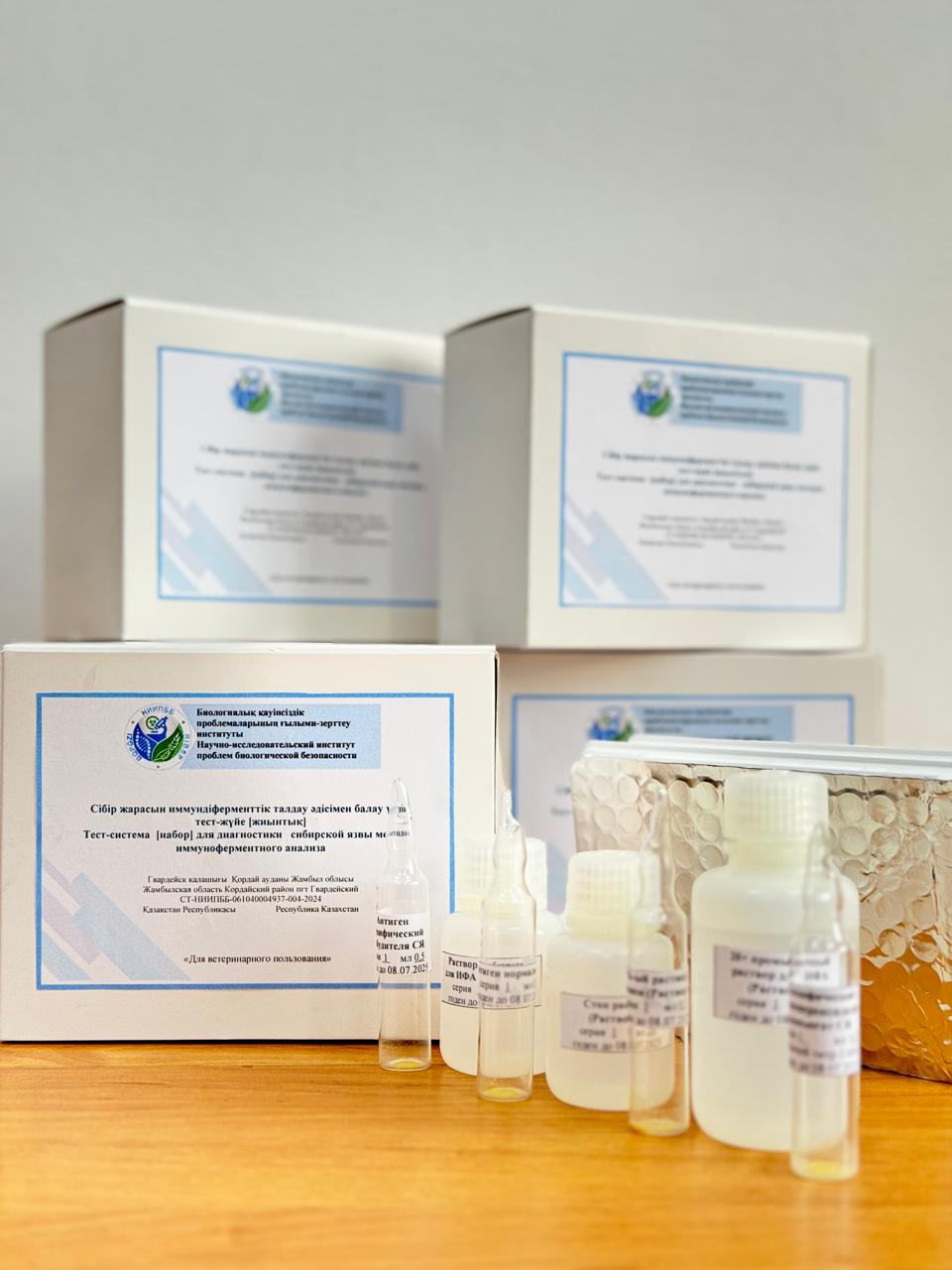 Trade name
Test system (kit) for the diagnosis of anthrax by enzyme-linked immunosorbent assay (ELISA)
(Certificate No. RK-VP-2-5660-25 dated July 04, 2025, issued by the Committee for Veterinary Control and Supervision of the Ministry of Agriculture of the Republic of Kazakhstan, valid for 5 (five) years until July 04, 2030)
Composition of the kit
The test system does not contain live microorganisms and includes:
– anthrax-specific immunoglobulin-coated microplate;
– specific immunoperoxidase conjugate;
– specific and normal antigens;
– solutions A, B, C, and D (peroxide, substrate, washing, and stop solutions);
– self-adhesive plate sealer.
The kit is designed for 90 test reactions, excluding control samples.
Intended use
The test system is intended for detection of anthrax-specific antigens in animal biological materials and cultures. The method is based on antigen–antibody interaction with colorimetric signal detection, ensuring high sensitivity and accuracy.
The kit is intended for veterinary diagnostic and research laboratories for disease diagnosis, monitoring, and evaluation of vaccination effectiveness.
Advantages
The test system demonstrates high sensitivity and specificity, enabling reliable detection of anthrax antigens at low concentrations. It is easy to use, does not require complex equipment, and provides results within 2–3 hours, making it suitable for mass serological surveillance of anthrax.
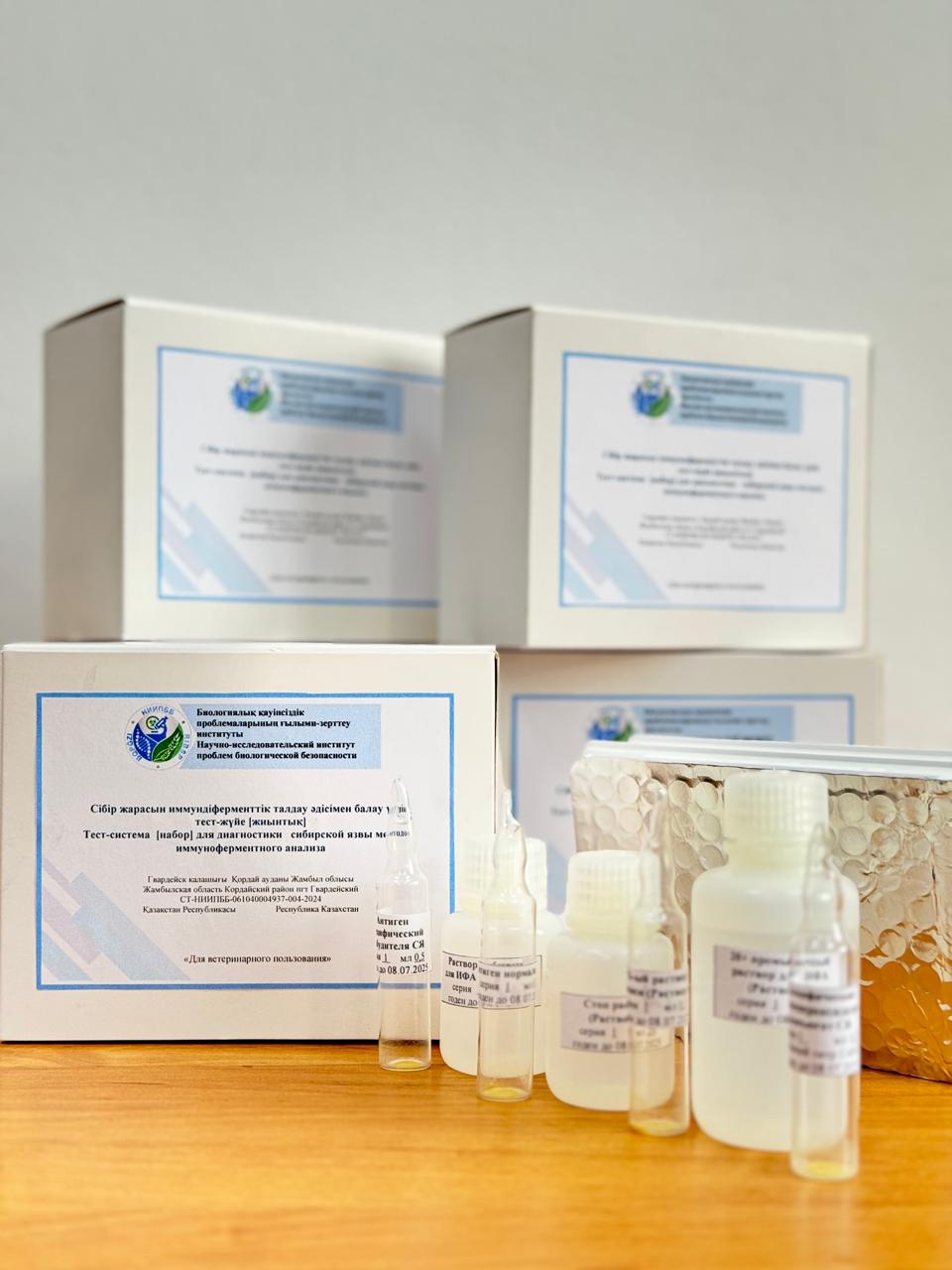 Trade name
Test system (kit) for the diagnosis of equine epizootic lymphangitis by enzyme-linked immunosorbent assay (ELISA)
(Certificate No. PK-VP-2-5664-25 dated July 04, 2025, issued by the Committee for Veterinary Control and Supervision of the Ministry of Agriculture of the Republic of Kazakhstan, valid for 5 (five) years until July 04, 2030)
Composition of the kit
The test system does not contain live microorganisms and is designed for 90 reactions, excluding control samples. The kit includes: an immunoglobulin-coated microplate specific to the causative agent of equine epizootic lymphangitis, a specific immunoperoxidase conjugate, specific and normal antigens, ELISA reagents (1% peroxide solution, substrate solution, 20× wash buffer, stop solution), and a self-adhesive plate sealer.
Intended use
The test system is intended for detection of specific antibodies to Histoplasma farciminosum in equine serum. The method provides high sensitivity and reliability.
The kit is intended for veterinary laboratories and is used for early diagnosis, serological monitoring, and evaluation of preventive measures in horse-breeding farms.
Advantages
The test system accurately detects antibodies to the causative agent of equine epizootic lymphangitis, is easy to use, does not require complex equipment, and is suitable for mass serological studies. High sensitivity and specificity enable effective control of the epizootic situation and prevention of disease spread among horses.