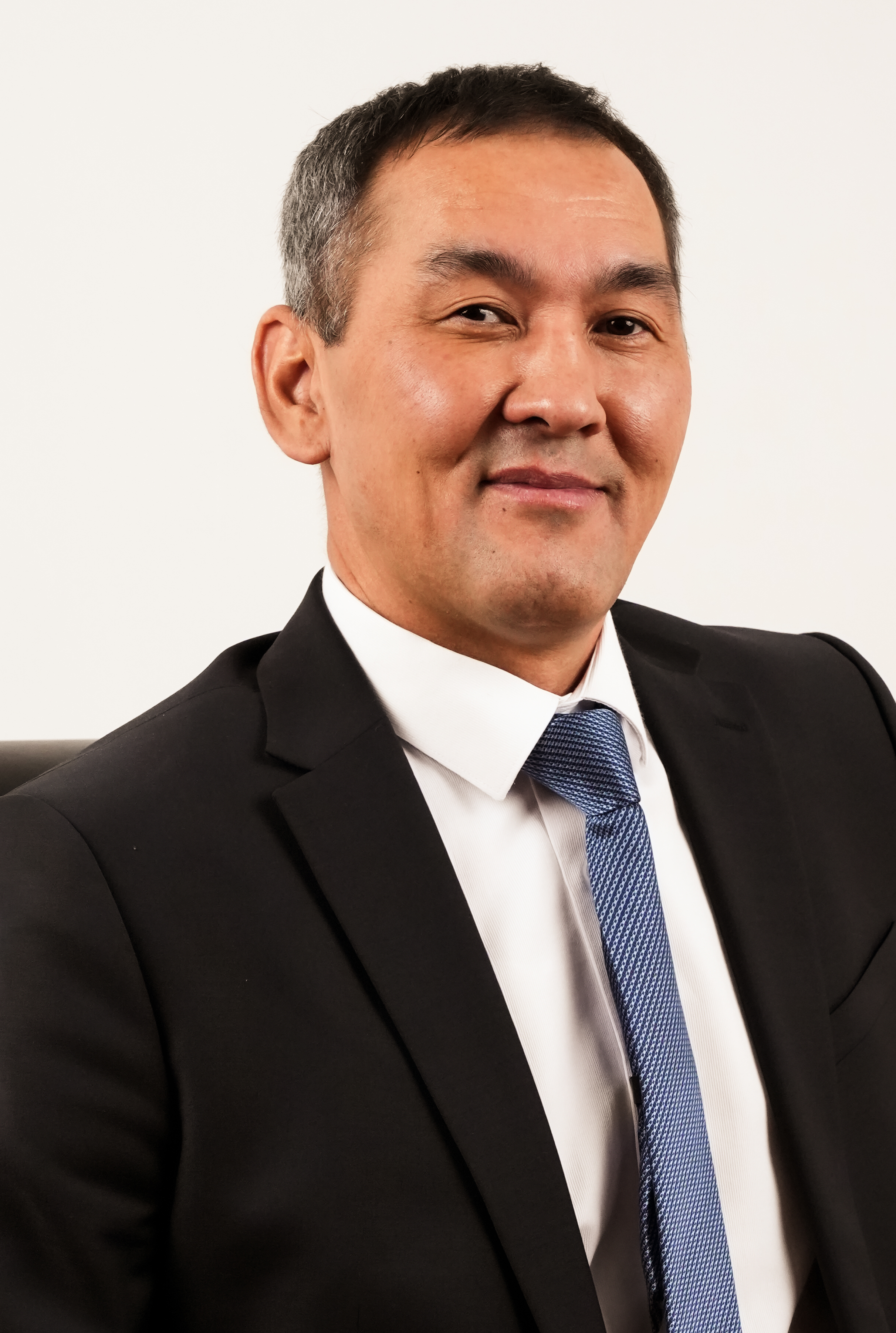
 KOZHABERGENOV NURLAN SIYAZBEKOVICH
Head of Laboratory
Specialist in molecular biology, electron microscopy, NGS sequencing, and bioinformatics, as well as the development of PCR test systems and biochips. Author of over 60 scientific publications and 10 patents for inventions and utility models. Awarded the “Halyk Algysy” Medal in 2021 and the “Excellence in Healthcare” badge in 2024. Internships and training:
2007 – All-Russian Research Institute of Veterinary Sanitation, Hygiene, and Ecology (VNIIZH), Vladimir, Russia; training in mathematical modeling of epizootic processes using GIS;
2012–2013 – Research Institute of Influenza, St. Petersburg, Russia; training in modern diagnostic methods using biological microchips for identification and subtyping of Influenza A virus;
September 2013 – Plum Island Animal Disease Center, New York, USA; international training course on transboundary animal diseases;
2016 – Engelhardt Institute of Molecular Biology, Moscow, Russia; training in working with biological microchips;
2018 – Los Alamos National Laboratory, New Mexico, USA; training in next-generation sequencing and bioinformatics.
ORCID ID – https://orcid.org/0000-0001-6299-9399
Scopus ID – 56442641900
Web of Science ID- P-5334-2017
+7(72636)7-22-28, вн. 137
Projects:
| AP09058338 | Study of the antiviral activity of drugs against SARS-CoV-2 in vitro and conducting molecular-epidemiological analysis of circulating COVID-19 strains. |
Research areas of the laboratory:
- Extraction and purification of nucleic acids from biological samples.
- Identification of microorganisms using PCR and RT-PCR methods.
- Quantitative determination of target sequences using digital PCR.
- Design and synthesis of specific oligonucleotides.
- DNA and cDNA fragment sequencing using the Sanger method.
- Whole-genome and metagenomic (NGS) sequencing of microorganisms.
- Genotyping of microorganisms.
- Creation of genetic passports.
- Electron microscopy of microorganisms.
- Development of diagnostic reagents.
- Conducting on-site training seminars and workshops.
Main publications of the laboratory: